INTRODUCTION
This guide has been developed to help you prepare for total knee replacement surgery and provide essential information for post-operative care, recovery, and rehabilitation. While many patients will experience a significant improvement in mobility, function, and quality of life, it is important to remember that the original aim of knee replacement surgery was, and still is, to alleviate the pain from arthritis.
HOW DOES THE KNEE FUNCTION?
The knee joint consists of three primary bones: the femur (thigh bone), the tibia (shin bone), and the patella (knee cap). Although it mainly bends and acts as a hinge joint, it also has rotational movement that occurs during bending and straightening. The joint’s stability and ability to support body weight depend on surrounding muscles, ligaments, and other connective tissues. Within the joint, cartilage rings called the meniscus serve as a cushion, reducing impact and absorbing shock during activities such as walking and stair climbing. The joint surfaces are lined with a smooth layer of articular cartilage, which cushions the joint and allows for smooth movement.
WHAT IS ARTHRITIS?
As we age, the cartilage in our joints can become damaged and wear down, leading to conditions such as osteoarthritis. This type of arthritis results in the breakdown of the cartilage in the knee joint, causing damage to the joint surface, often resulting in bone-on-bone contact. When arthritis becomes severe, bone spurs form around the edge of the joint surface and will often be seen on x-rays. Symptoms of arthritis commonly include pain, stiffness, and difficulty walking. Pain may cause significant disturbance to your sleep at night and your walking and standing tolerance during the day. Stiffness, sometimes caused by bone spurs and by inflamed tissues around the joint, can make daily activities such as putting on shoes, getting out of a car, or climbing stairs challenging.
NON-SURGICAL TREATMENTS
For those with knee arthritis, initial treatment often involves non-surgical measures like pain relief medications, anti-inflammatory drugs, injections, nerve blocks, and exercise. Weight loss, if applicable, can also help alleviate symptoms. These strategies can significantly improve function and may delay the need for surgical intervention. Even in cases when surgery is indicated, physical activity or formal physical therapy can help ensure your knee will be as strong and mobile as possible, improving your recovery after surgery.
WHY CONSIDER KNEE REPLACEMENT SURGERY?
If conservative treatments fail to manage the pain and stiffness effectively, and your daily activities or sleep are disrupted, a hip replacement might be the best option. This procedure is most suitable when arthritis symptoms severely impact quality of life on a regular basis.
- Do you limit your activities with loved ones because of your knee pain?
- When it comes to knee pain, do you have more bad days than good days?
- Does your knee impact your ability to maintain your physical health?
- Are you currently using, or considering using, a cane or walker due to knee pain?
If you are answering “yes” to these questions, it may be worth your time to get more information on knee replacement surgery.
TIMING YOUR SURGERY
While knee replacement is effective, it is a major surgery with small but significant risks of complications. Surgery is typically recommended when arthritis symptoms make daily life unmanageable. The right time for surgery is when pain and limitations significantly and consistently affect your life.
SUCCESS RATE OF KNEE REPLACEMENTS
Knee replacement surgery is a highly successful orthopedic procedure. 20 years ago, a paper reported that only about 80% of knee replacement patients were satisfied with their surgery. It is a commonly quoted paper and did a great job at pushing our profession to find ways to improve surgery and now that commonly quoted number is no longer true. New studies now show about 90-93% of patients report high satisfaction, and many resume normal activities within six months.
Over 80% of knee replacements will last more than 20 years. Below you can see the chance of needing a revision in your lifetime depending on your age at the time of surgery and whether you received a total knee replacement or partial knee replacement.
New Zealand Registry Data Lifetime Revision Risk Total Knee Replacement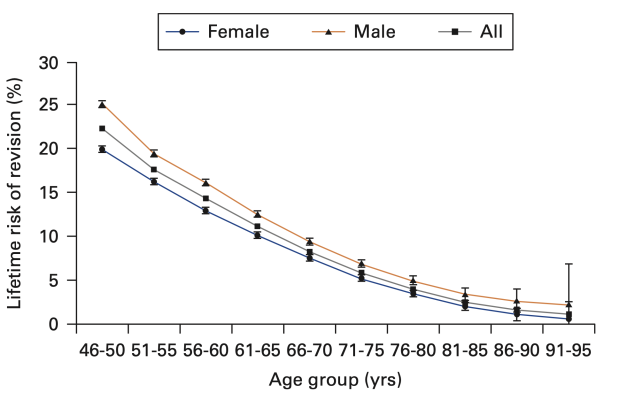
New Zealand Registry Data Lifetime Revision Risk Partial Knee Replacement
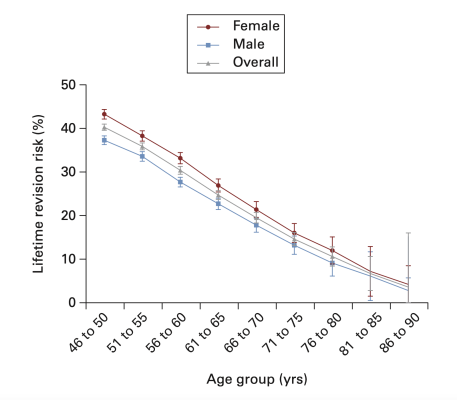
You can see that the chance of a revision surgery after partial knee replacement is significantly higher than a total knee replacement. However, this is most commonly due to progression of arthritis over time in the other areas of the knee and not from failure of the surgery. A partial knee replacement is designed to be less surgery with a better recovery, and has a lower chance of serious complication while at the same time providing a more natural feeling knee. Not all patients are candidates for partial knee arthroplasty, but if you are, it is certainly worth consideration.
THE SURGERY
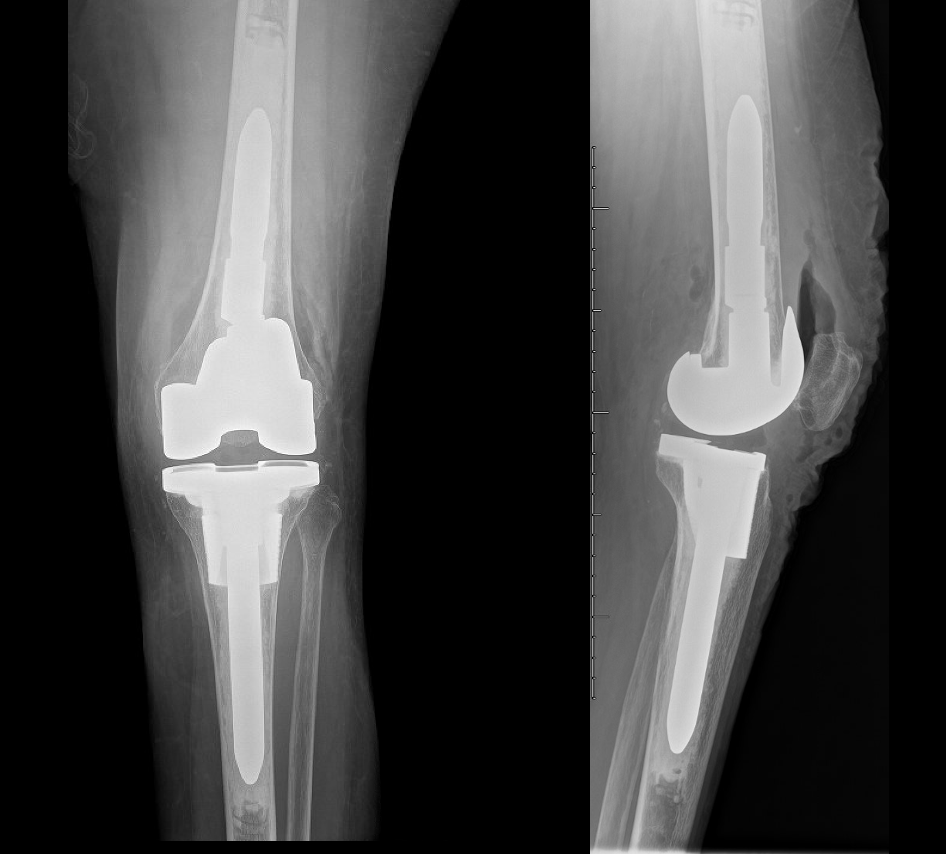
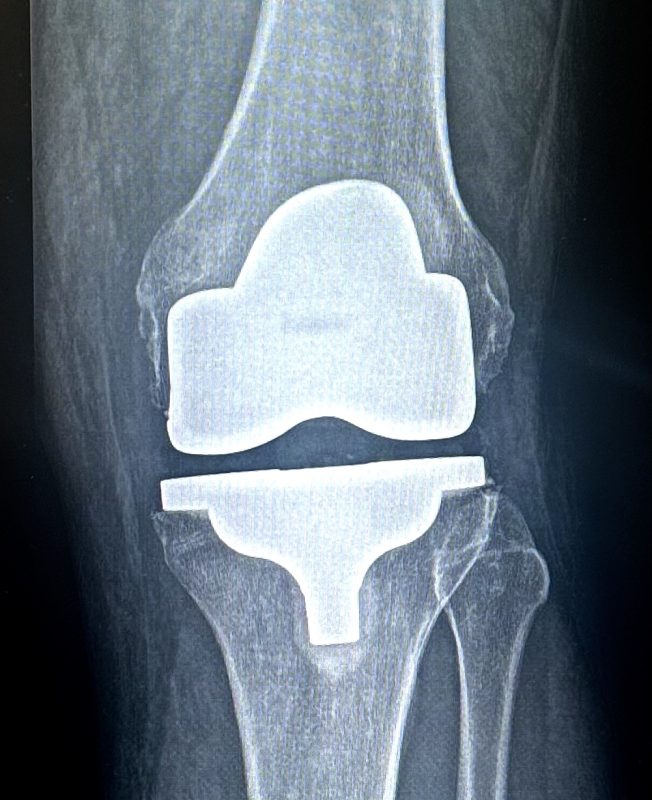
Total Knee Replacement involves replacing the damaged cartilage and bone in the knee joint with artificial components made of metal and plastic. Recovery protocols focus on early mobilization, with most patients starting to walk with assistance the same day or the day after surgery.
PREPARATION FOR SURGERY
Before your operation, you will undergo a thorough health assessment to ensure your safety. Please see this section for more information on preparing for surgery. Engaging in pre-operative exercises can improve strength and flexibility, aiding in recovery. Additionally, preparing your home for a safe recovery environment is essential.
When to stop medications before surgery:
-
- 14 Days Before Surgery:
- Stop GLP-1 agonists and weight loss medicines (e.g., Ozempic, Trulicity, Wegovy)
- 7 Days Before Surgery:
- Stop Aspirin, BC Powder, Plavix, Pradaxa, anti-inflammatory medications (except Celebrex), all THC-containing products, herbal supplements, vitamin supplements, fish oil
- 5 Days Before Surgery:
- Stop Warfarin, Coumadin, Xarelto (Rivaroxaban), Eliquis (Apixaban)
- 14 Days Before Surgery:
Medications You May Continue Up to Surgery:
-
- Tylenol
- Celebrex
- Ultram (Tramadol)
- Vitamin C
- Iron Supplements
HOSPITAL STAY AND AFTERCARE
After surgery, most patients will be discharged home the same day. Rarely, patients with complex medical issues or issues with their home environment may require an inpatient stay.
RETURNING TO NORMAL ACTIVITIES
- Return to driving: 2-4 weeks, once off narcotics and using a cane or less for walking
- Return to sedentary work: 6 weeks
- Return to manual labor: 12 weeks
RISKS AND COMPLICATIONS OF KNEE REPLACEMENTS
Common Risks (2-5%):
- Bleeding: May require additional bandage changes, or very rarely blood transfusion or surgical intervention.
- Pain: Pain after surgery is common and may worsen for the first 1-2 weeks. In some instances, pain may persist long-term.
- Prosthesis wear: All mechanical implants will wear out over time, however, current technologies are extremely long lasting.
- Joint stiffness: May require additional interventions including manipulation (where the doctor moves the joint while you are under anesthesia) or possibly additional surgery to remove scar tissue. The critical period for regaining range of motion is the first 3 months after surgery.
Less Common Risks (1-2%):
- Infection: Metal implants have no way to fight bacteria. If bacteria get onto the implants additional surgery and long term (at least 3 months) use of antibiotics are required.
- Blood clots: Can form in legs and lead to pulmonary embolism (blood clot in lungs).
- Instability: May require additional therapy, bracing or surgery.
- Implant Loosening: May require additional surgery.
Rare Risks (<1%):
- Delayed wound healing
- Nerve damage
- Bone fractures
- Pulmonary embolism
- Death (extremely rare but has to be part of this list)
**For a comprehensive guide to total joint replacement, including information on preparation and daily recovery expectations, please see Dr Andrew Wickline’s total hip or knee replacement guides found here:
Knee Booklet
For 10% off – Use discount code: SPENCER10
Dr. Andrew Wickline’s Total Knee Replacement Guide