INTRODUCTION
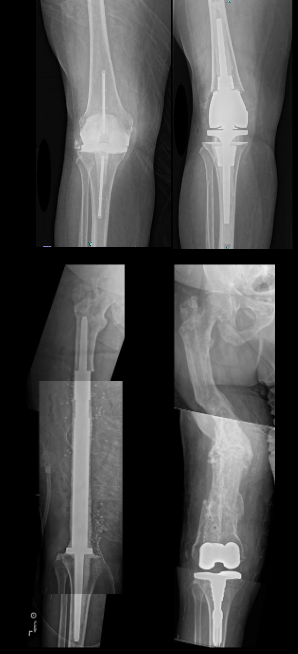
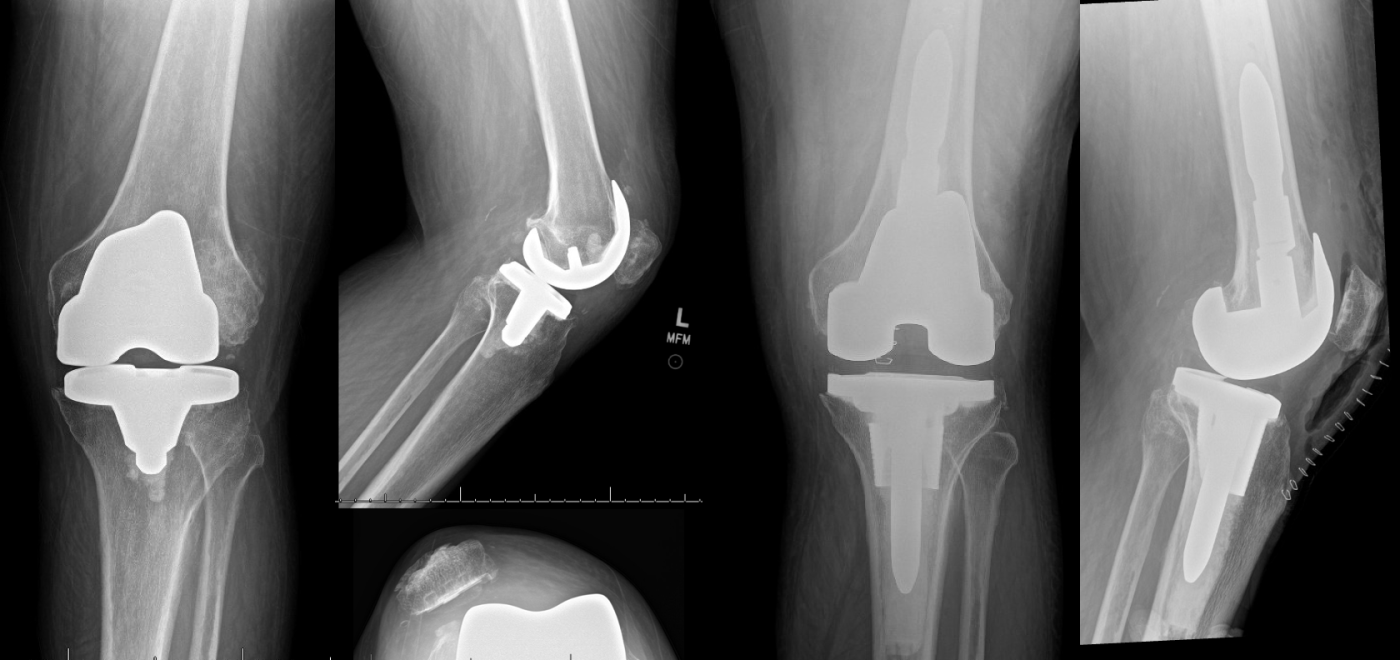
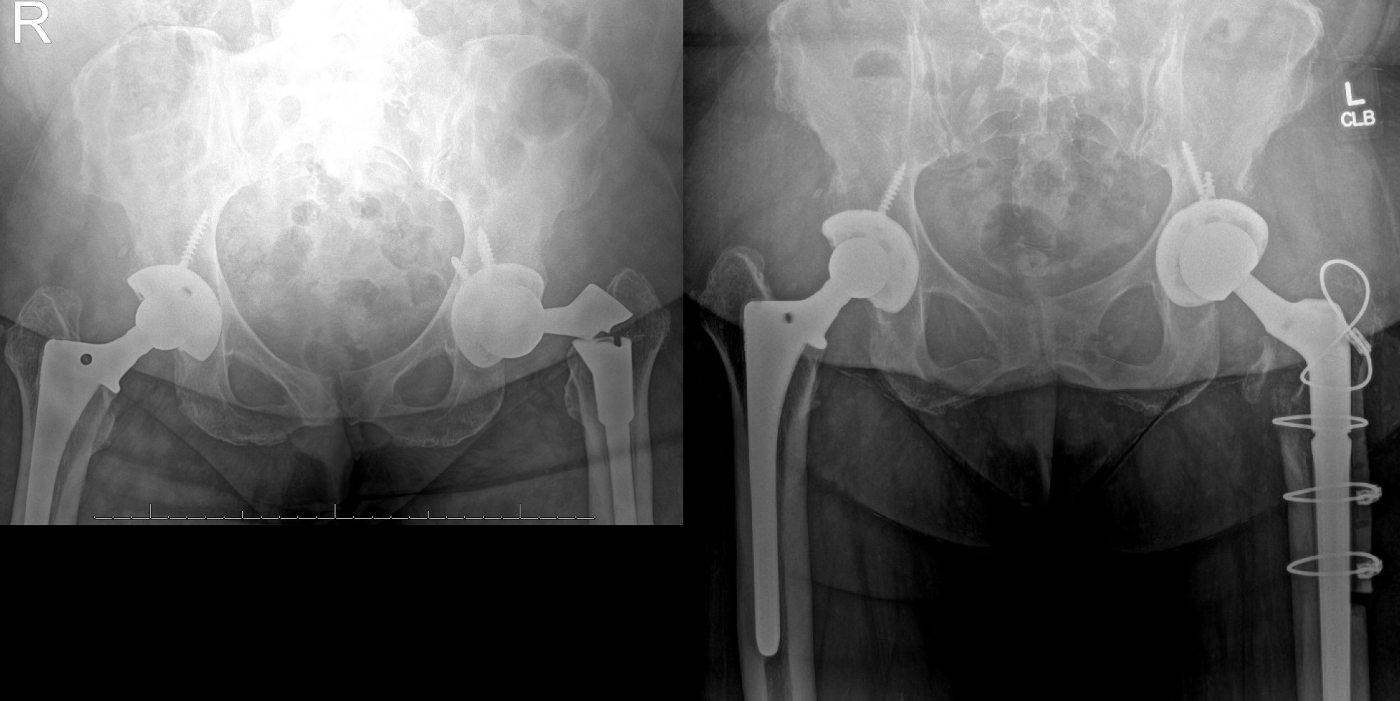
This guide provides information about revision total hip and knee replacement surgeries. Revision surgery may be required if a previous joint replacement fails due to complications like infection, prosthesis wear, loosening, or other issues. While these surgeries are usually quite effective, they are more complex than primary replacements and typically involve a longer recovery period. These situations are unique, this guide likely does not cover everything relevant to your case if you are in need of a revision of your previous joint replacement.
WHY DOES REVISION SURGERY OCCUR?
Over time, joint replacements can wear out or loosen, leading to the need for revision surgery. Infections can be caused by bacteria at the site of the surgery, or from bacteria in your bloodstream that find their way to your replaced joint. When bacteria attach to the metal of the implant, they cover themselves in a coating that makes it extremely difficult for medicines to reach them. The only way we are able to manage these infections at this time is to address infection quickly and aggressively, often involving removal of the metal and replacement with new parts.
Revision may also be necessary due to:
- Infection: Infection can develop on the implant or in surrounding tissues.
- Prosthesis wear and loosening: Over time, the artificial joint components may wear down or loosen, requiring replacement.
- Fractures or deformities: Fractures or deformities of the bone around the implant or of the implant itself may necessitate revision surgery.
In cases of severe bone loss or infection that cannot be controlled, the joint may no longer be salvageable, and other procedures such as fusion, Girdlestone resection arthroplasty, or even amputation may need to be considered.
NON-SURGICAL TREATMENTS
For patients with complications following joint replacement, conservative treatments may help delay or avoid the need for revision surgery. These treatments include pain relief medications, physical therapy, and lifestyle modifications. For painful total knee replacements that are not infected, in good position and function properly, there are newer treatments for addressing the nerves that send the pain signals from the knee. By treating these nerves you can continue to use your well-functioning knee with less pain. These treatments are not always covered by insurance and often have many steps that must be taken prior to approval.
WHY CONSIDER REVISION SURGERY?
Revision surgery may be necessary if a joint replacement fails to alleviate pain or improve mobility, or if complications like infection, prosthesis wear, or loosening occur. If you experience symptoms such as:
- Persistent pain despite conservative treatments
- Limited range of motion or instability
- Difficulty performing normal daily activities due to joint issues
you may be a candidate for revision surgery. The decision to proceed with revision surgery is based on the severity of the issue and the potential benefits, which are weighed against the complexity and risks of the procedure.
TIMING YOUR SURGERY
Although revision surgeries are highly effective, they carry a higher risk of complications compared to primary joint replacement surgery. The decision to undergo revision surgery should be based on how much the issue is affecting your quality of life. If conservative treatments are ineffective, or if there is significant implant failure, revision surgery may be the best option. Revision surgery is often 2-3 times longer than first time joint replacement and more challenging to recover from.
SUCCESS RATE OF REVISION HIP AND KNEE REPLACEMENTS
Revision surgeries for hip and knee replacements are highly successful but are more complex than primary joint replacements. Success rates for revision total knee replacement (TKR) are around 80-90%, while revision total hip replacement (THR) generally has similar outcomes, though slightly lower in cases with significant bone loss. Longer recovery periods are often required, and outcomes can vary based on the complexity of the revision.
THE SURGERY
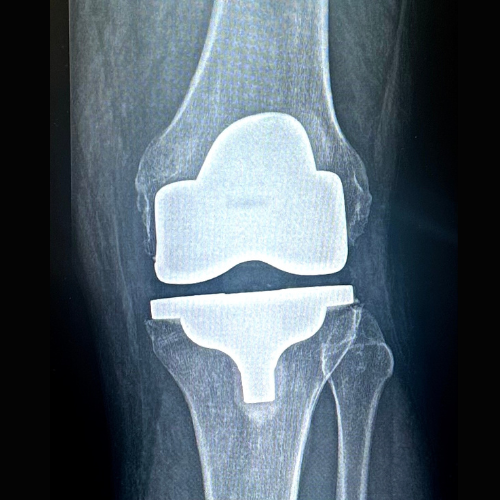
Revision Total Knee Replacement (TKR): This involves removing the old prosthesis and replacing it with a new one. The surgery is more intricate due to the need to address any bone loss, deformities, or complications caused by the previous implant. Additional procedures may be necessary to correct alignment or bone structure.
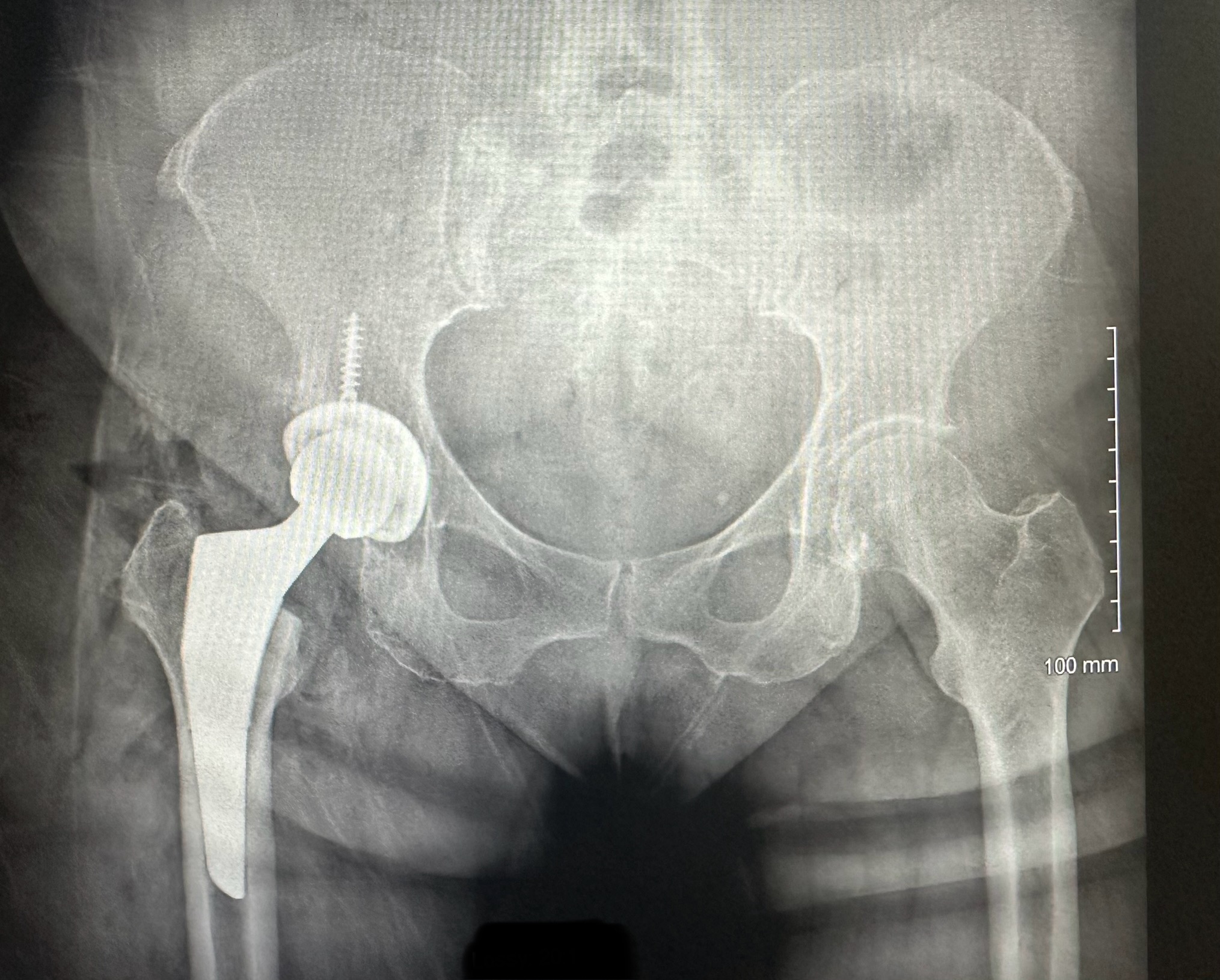
Revision Total Hip Replacement (THR): Similarly, revision hip replacement involves removing the failed implant and replacing it with a new prosthesis. The procedure may include addressing bone loss, deformities, or infection. In some cases, the use of custom implants may be required to restore joint function.
PREPARATION FOR SURGERY
Before undergoing revision surgery, your surgeon will conduct a comprehensive health assessment and imaging studies to evaluate the condition of your implant and surrounding bone. Preoperative exercises may be recommended to improve strength and mobility before the procedure. You may need to adjust medications, and certain drugs (e.g., blood thinners, weight loss medications) may need to be stopped prior to surgery.
HOSPITAL STAY AND AFTERCARE
After revision surgery, most patients are typically discharged within 1-3 days, though complex cases and infection cases may require a longer stay. Physical therapy begins soon after surgery to help improve mobility and strength. Pain management strategies, including medications and ice therapy, will help manage discomfort.
RETURNING TO NORMAL ACTIVITIES
Recovery after revision surgery may take longer than for a primary joint replacement. The timeline for resuming normal activities will depend on your individual situation, but general guidelines include:
- Driving: Typically after 4-6 weeks, once off narcotics and walking with minimal assistance.
- Sedentary work: Around 6-8 weeks.
- Manual labor: Around 12-16 weeks.
Always consult with your surgeon before returning to any strenuous activities.
RISKS AND LONGEVITY OF REVISION JOINT REPLACEMENTS
Revision joint replacements are highly durable, “heavy-duty” type joint replacements, but they carry additional risks due to the complexity of the surgery. Some of the risks for revision total hip arthroplasty (THA) and revision total knee arthroplasty (TKA) relative to primary (first time) THA and TKA:
- Infection
- Revision THA/TKA: Higher risk (2-5%) due to prior surgeries, scar tissue, and potential pre-existing infection.
- Primary THA/TKA: Lower risk (<1-2%), as the surgical field is unscarred and sterilization more straightforward.
- Implant Loosening/Wear
- Revision THA/TKA: Increased risk due to more complex biomechanics and possible bone loss from prior surgeries.
- Primary THA/TKA: Rare in the short term, typically seen after 10+ years of implant use (1-2%).
- Dislocation
- Revision THA: Higher risk (5-10%) due to changes in soft tissue tension and complex biomechanics. Much higher if you have a history of previous dislocation or if there are certain areas of bone loss or muscle weakness.
- Primary THA: Lower risk (1-2%) with proper implant positioning.
- Joint Instability
- Revision TKA: More common due to bone loss, ligament damage, and challenges in achieving optimal alignment.
- Primary TKA: Rare (1-2%), usually related to soft tissue imbalance.
- Bone Loss/Fractures
- Revision THA/TKA: High risk due to osteolysis (bone loss around the implant), prior bone removal, or damage during component removal.
- Primary THA/TKA: Uncommon unless the patient has pre-existing conditions like osteoporosis or severe deformity.
- Nerve Damage
- Revision THA/TKA: Higher risk (2-3%) due to scar tissue, altered anatomy, and longer surgical time.
- Primary THA/TKA: Rare (<1%), usually temporary if it occurs.
- Blood Vessel Damage
- Revision THA/TKA: Rare but slightly higher risk compared to primary surgeries due to scarring and altered anatomy.
- Primary THA/TKA: Very rare (<1%).
- Blood Clots (DVT/PE)
- Revision THA/TKA: Risk slightly higher (2-5%) due to prolonged surgery and reduced mobility postoperatively.
- Primary THA/TKA: Moderate risk (1-2%), managed with anticoagulants and early mobilization.
- Prosthesis Failure
- Revision THA/TKA: Increased likelihood of further revisions over time due to mechanical wear and challenges in achieving optimal outcomes.
- Primary THA/TKA: Rare early on; long-term risk increases over decades as implants wear down.
- Joint Stiffness
- Revision TKA: More likely due to scar tissue, prolonged immobilization, or more extensive soft tissue damage.
- Primary TKA: Less common, often managed with early mobilization and physical therapy.
- Delayed Wound Healing
- Revision THA/TKA: Higher risk, particularly in cases of infection or significant soft tissue compromise.
- Primary THA/TKA: Lower risk with careful wound care.
- Amputation/Fusion/Girdlestone Resection Arthroplasty
- Revision THA/TKA: Rare but higher risk due to the severity of complications (e.g., uncontrolled infection, severe bone loss, or irreparable implant failure).
- Primary THA/TKA: Extremely rare; usually considered only in catastrophic cases.
- Death
- Revision THA/TKA: Slightly higher risk (<1%) due to increased surgical complexity and pre-existing medical conditions in many patients.
- Primary THA/TKA: Extremely rare (<0.5%).
AMPUTATION, FUSION, AND GIRDLESTONE RESECTION ARTHROPLASTY: RARE RISKS
In rare cases, when revision surgeries are not successful in restoring function, or if the joint and surrounding structures are severely damaged, alternative procedures such as fusion, amputation, or Girdlestone resection arthroplasty may be considered.
- Amputation: In extreme cases where the joint cannot be salvaged due to infection, bone loss, or severe deformities, amputation may be necessary. This is a rare outcome and usually serves as a last resort when all other options have failed.
- Fusion: Joint fusion (arthrodesis) is a procedure that eliminates movement between two bones, reducing pain. While fusion can provide pain relief, it sacrifices joint motion and may limit function in the affected limb. This procedure is generally considered when joint replacement is no longer viable.
- Girdlestone Resection Arthroplasty: This procedure involves the removal of the hip joint, leaving a “dead space” without a prosthesis. It is sometimes used when infection or bone loss makes joint replacement unfeasible. While it can offer pain relief, it often results in significant functional limitations, such as significant difficulty walking, even with assistive devices.
In conclusion, revision surgeries for hip and knee replacements are complex and involve a higher risk of complications than primary replacements. However, they remain a highly effective solution for patients with failed implants or severe complications. In some cases, alternative procedures such as fusion, Girdlestone resection, or even amputation may be considered when all other options have been exhausted. Discuss these risks thoroughly with your surgeon to ensure the best possible outcome. Similar to primary joint replacements, research has demonstrated that results are better with fellowship trained surgeons and surgeons that perform a high volume of revision joint replacements per year (over 40 revisions per year).